
You brush your teeth every day—but are you doing it correctly? Most people spend less than a minute brushing and skip flossing altogether, yet wonder why they still get cavities or gum problems. The truth is, it’s not just about brushing—it’s about brushing right. At The Right Dentist, we’ve seen firsthand how proper technique can mean the difference between a lifetime of healthy teeth and years of expensive dental work.
The good news? A proper oral hygiene routine takes just five minutes, twice a day. In this guide, we’ll break down the exact techniques used by dental professionals, step by step, so you can protect your smile for life.
Why Technique Matters More Than You Think
Brushing harder doesn’t mean cleaner teeth—in fact, aggressive brushing can damage your enamel and gums. Similarly, rushing through your routine means missing the spots where plaque loves to hide. Plaque that isn’t removed within 24-48 hours hardens into tartar, which can only be removed by a dental professional and leads to cavities and gum disease.
The five minute routine we’re about to share removes plaque effectively, protects your gums, freshens your breath, and prevents the buildup that causes serious dental problems down the road.
Your Complete 5 Minute Oral Health Routine
Step 1: Choose the Right Tools (30 seconds)
Before you begin, make sure you have:
The Right Toothbrush:
- Soft bristled brush (medium and hard bristles can damage gums and enamel)
- A small to medium head that can reach all areas of your mouth
- Replace every 3 to 4 months, or sooner if bristles are frayed
- Electric toothbrushes are excellent—they do much of the work for you with proper oscillating or sonic technology
Fluoride Toothpaste:
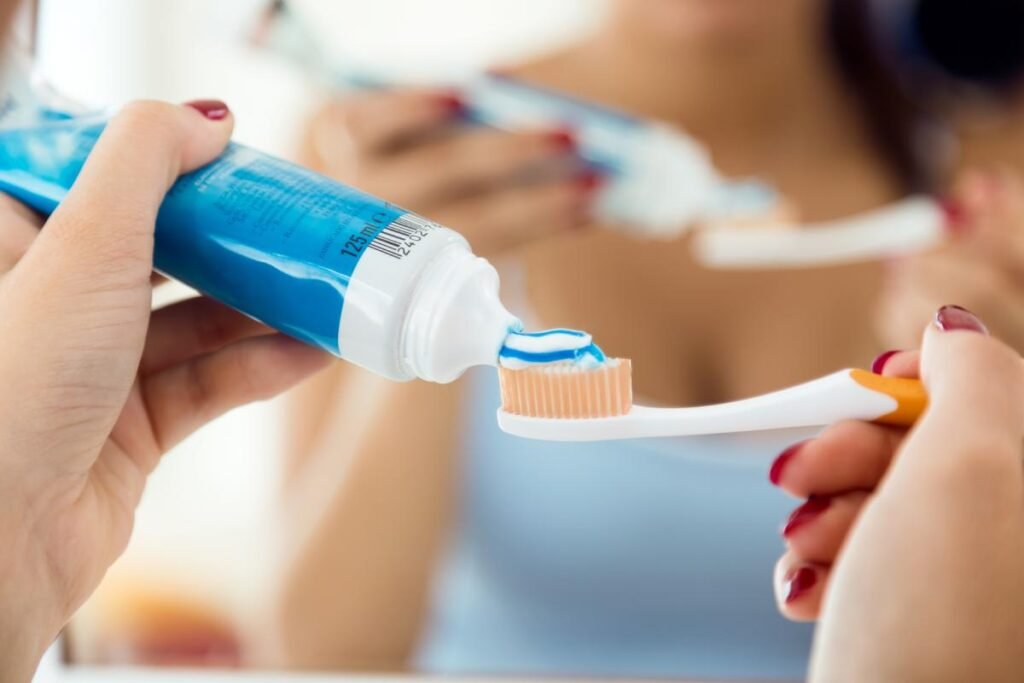
- Use a pea sized amount for adults
- Look for the ADA Seal of Acceptance
- Fluoride strengthens enamel and helps prevent decay
Quality Dental Floss:
- Waxed or unwaxed—your preference
- Floss picks are acceptable, but traditional floss is more effective
- Water flossers are a good supplement, but shouldn’t completely replace traditional flossing
Step 2: The Perfect Brushing Technique (2 minutes)
The 45 Degree Angle Method:
This is the technique dental professionals recommend for optimal plaque removal and gum health.
- Position your brush correctly: Hold your toothbrush at a 45 degree angle to your gums, where your teeth and gums meet. This angle allows the bristles to clean just under the gum line, where plaque accumulates.
- Use gentle, circular motions: Move the brush in small, gentle circular motions—about the width of one tooth at a time. Never scrub back and forth aggressively. Think “massage,” not “scrub.”
- Follow a systematic pattern: Divide your mouth into four quadrants (upper right, upper left, lower right, lower left) and spend 30 seconds on each: Outer surfaces: Start with the outer surfaces of your teeth, working from the back molars toward the front. Keep that 45 degree angle and use gentle circles. Inner surfaces: Move to the inner surfaces. For the front teeth, tilt the brush vertically and use gentle up and down strokes. Chewing surfaces: Brush the flat chewing surfaces with back and forth motions to get into the grooves where food particles collect.
- Don’t forget the gum line: Many people brush only the visible part of their teeth. The gum line is where plaque builds up most, so ensure your bristles reach this critical area.
- Time yourself: Two full minutes feels longer than you think. Consider using a timer, playing a two minute song, or using an electric toothbrush with a built in timer.
Common Brushing Mistakes to Avoid:
- Brushing too hard, you should never see your bristles splaying out
- Rushing through in less than two minutes
- Using the same pattern every time (change it up occasionally to ensure you don’t miss spots)
- Forgetting the back molars, where cavities commonly form
- Brushing immediately after acidic foods or drinks (wait 30 minutes to avoid damaging softened enamel)
Step 3: Master the Art of Flossing (2 minutes)
Here’s a startling fact: brushing alone cleans only about 60% of your tooth surfaces. The other 40%—the spaces between your teeth—can only be reached with floss. Skipping floss is like showering, but only washing 60% of your body.
The Proper Flossing Technique:
- Use enough floss: Break off about 18 inches of floss. This seems like a lot, but you need a fresh section for each tooth to avoid spreading bacteria.
- Wrap it properly: Wind most of the floss around your middle fingers, leaving about 2 inches of clean floss between them. Use your thumbs and index fingers to guide the floss.
- Gentle insertion: Gently slide the floss between your teeth using a back and forth motion. Never snap it down onto your gums—this can cause damage and bleeding.
- The C shape technique: When the floss reaches the gum line, curve it into a C shape against one tooth. Gently slide it into the space between the gum and tooth until you feel resistance.
- Up and down motion: Gently rub the side of the tooth with an up and down motion, going slightly below the gum line. Make sure you’re scraping the tooth surface, not just moving the floss in and out.
- Don’t forget the back side: Curve the floss around the adjacent tooth and repeat the process. Each gap requires cleaning both sides—that’s two surfaces per space.
- Move to fresh floss: Use a clean section of floss for each tooth. This prevents transferring bacteria from one area to another.
- Include the back teeth: The back molars are easy to forget but critical to clean. Curve the floss around the backside of your last molars.
Flossing Tips:
- If your gums bleed when you first start flossing, don’t stop—bleeding usually indicates gum inflammation from plaque buildup. With consistent flossing, bleeding typically stops within a week or two. If it persists, see your dentist.
- Floss before brushing to dislodge particles that brushing can then rinse away.
- Be patient—flossing gets faster and easier with practice.
- If traditional floss is challenging, try floss picks, interdental brushes, or a water flosser, but discuss the best option for your needs with your dentist.
Step 4: Clean Your Tongue (30 seconds)
Your tongue harbours bacteria, dead cells, and food particles that contribute to bad breath and can redeposit bacteria onto your freshly cleaned teeth. Tongue cleaning is often overlooked but essential for complete oral hygiene.
How to Clean Your Tongue:
- Use a tongue scraper or your toothbrush: Tongue scrapers are more effective, but your toothbrush works too.
- Start at the back: Stick out your tongue and place the scraper or brush as far back as comfortable (without gagging).
- Pull forward: Apply gentle pressure and pull the scraper or brush forward toward the tip of your tongue. Rinse the scraper after each pass.
- Cover the whole surface: Make several passes, covering the centre and both sides of your tongue.
- Rinse thoroughly: Rinse your mouth with water when finished.
Benefits of tongue cleaning:
- Significantly reduces bad breath
- Removes bacteria before they can migrate to teeth
- May improve taste sensation
- Contributes to overall oral health
Step 5: Rinse and Finish (30 seconds)
- Rinse your mouth: Swish water vigorously to remove dislodged food particles and excess toothpaste.
- Consider mouthwash (optional): If you use mouthwash, choose one with the ADA Seal of Acceptance. Therapeutic mouthwashes containing fluoride or antibacterial ingredients offer additional benefits beyond fresh breath. Use according to directions—typically 30 seconds of swishing.
- Rinse your toothbrush: Thoroughly rinse your brush under running water to remove toothpaste and debris. Store it upright to air dry—never in a closed container where bacteria can thrive.
- Don’t eat or drink for 30 minutes: This allows fluoride and other beneficial ingredients to continue working on your teeth.
When to Perform Your 5 Minute Routine
Twice Daily is Essential:
- Morning: After breakfast is ideal, but if you eat acidic foods (citrus, coffee), wait 30 minutes before brushing.
- Night: Before bed is crucial—saliva production decreases during sleep, making nighttime the riskiest period for bacterial growth. Never skip nighttime brushing.
The 30 Minute Rule:
Wait 30 minutes after consuming acidic foods or beverages (soda, wine, citrus, tomatoes) before brushing. Acid temporarily softens enamel, and immediate brushing can cause damage. Rinse with water instead, then brush later.
Special Considerations for Different Needs
For Braces or Orthodontic Appliances:
- Budget extra time—up to 10 minutes may be needed
- Use an orthodontic toothbrush or electric brush
- Thread floss under wires using a floss threader or orthodontic floss
- Consider a water flosser for hard to reach areas
- Pay special attention to brackets and wires where food traps
For Sensitive Teeth:
- Use a soft bristled brush and extra gentle pressure
- Choose toothpaste formulated for sensitivity
- Avoid aggressive scrubbing and horizontal motions
- If sensitivity persists, see your dentist—it may indicate enamel wear or gum recession
For Gum Disease:
- Be extra diligent with gum line cleaning
- Consider an antibacterial mouthwash recommended by your dentist
- Floss gently but thoroughly
- More frequent professional cleanings may be necessary
For Children:
- Supervise brushing until age 7 to 8
- Use ageappropriate fluoride amounts
- Make it fun with songs, timers, or reward charts
- Teach proper technique early to establish lifelong habits
Beyond the 5 Minute Routine: Additional Oral Health Tips
Diet Matters:
- Limit sugary and acidic foods/beverages
- Snack on tooth friendly foods like cheese, nuts, and crunchy vegetables
- Drink water throughout the day to rinse away food particles
- Chew sugar free gum after meals to stimulate saliva production
Don’t Ignore Professional Care:
Even with perfect home care, professional cleanings every six months are essential. Dental hygienists can remove tartar buildup you can’t reach at home and catch problems early when they’re easiest to treat.
Pay Attention to Warning Signs:
Contact The Right Dentist if you experience:
- Bleeding gums that don’t improve with proper technique
- Persistent bad breath
- Tooth sensitivity
- Loose teeth
- Receding gums
- Jaw pain or clicking
The Long Term Payoff
Investing five minutes twice a day in proper oral hygiene pays enormous dividends:
- Fewer cavities and less need for fillings
- Lower risk of gum disease, which is linked to heart disease, diabetes, and other systemic health issues
- Fresher breath and improved confidence
- Reduced dental expenses over your lifetime
- Keeping your natural teeth for life—the best outcome possible
Your Commitment to Oral Health Starts Now
The technique you use matters just as much as the time you spend. By following this five minute routine twice daily with proper form, you’re investing in decades of healthy, beautiful smiles.
At The Right Dentist, we’re passionate about prevention. We’d rather teach you to maintain excellent oral health than treat problems down the road. During your next visit, we’re happy to demonstrate these techniques personally and answer any questions about your specific needs.